
Looking Beyond Revenue: Understanding Profit Margins in Aesthetics Practices

Revenue shows how busy you are. Margins reveal what’s actually working.
You had a full schedule last month. Back-to-back appointments, a waiting list, providers running through lunch. Then you looked at what was left after costs, and the numbers didn’t match the effort you were putting in.
Many practice owners can tell you their monthly revenue to the dollar, but two practices can produce nearly identical revenue and end the year in completely different financial positions. That gap between a busy practice and a profitable one usually comes down to margins.
When you understand your margins at the treatment level and see which services are actually generating profit, pricing decisions become clearer. Scheduling becomes more intentional. You stop optimizing for a full calendar and start optimizing for a healthy one.

Key Takeaways
The Download on Margins
Profit margins show how much revenue remains after the costs required to deliver treatments are covered. They help you understand whether the services generating revenue are actually contributing to the financial health of the practice.
There are two types of margins most practices should review:
Together, these metrics provide a clearer view of how services perform individually and how the business performs overall.
4 Simple Steps to Understand Your Practice’s Margins
Improving margin visibility doesn’t require complex financial modeling. In many practices, the information needed to evaluate profitability is already available.
It begins with reviewing a few core operational metrics and understanding how they influence performance over time.
Step One: Calculate Your True Cost Per Treatment
The starting point is understanding what it actually costs to deliver each service.
Product cost is usually easy to track, but it’s only part of the equation. The full cost of a treatment often includes:
Many practices initially underestimate treatment costs because they focus only on the product being used. When the full picture is considered, some services may appear more profitable than expected, while others may carry thinner margins than anticipated.
Provider time is also frequently overlooked. A treatment that generates strong revenue may still produce weaker margins if it requires significantly more provider time than other services.
Knowing the true cost per treatment helps ensure services are priced appropriately and that each appointment contributes meaningfully to the overall health of the practice.
Step Two: Review Utilization of Providers and Equipment
Utilization measures how effectively providers, treatment rooms, and devices are scheduled throughout the day.
For example, many practices invest heavily in energy-based devices. If a device sits unused and the treatments tied to those devices are only performed occasionally, then the time required to recover the initial investment can increase significantly.
Regularly reviewing utilization can reveal scheduling gaps, underused treatments, or opportunities to better align services with patient demand.
Even small improvements in scheduling consistency can have a meaningful impact on overall profitability.
Step Three: Compare Patient Acquisition Cost and Lifetime Value
Practices invest in marketing, advertising, and referral programs to attract new patients, and they should be measuring their resulting patient acquisition costs (PAC).
PAC measures how much it costs to bring each new patient through the door. You can calculate your PAC by taking your total marketing and sales expenses and dividing that by the number of new patients acquired during that same period.
Lifetime value (LTV) is another important metric that reflects how much revenue a patient generates over the course of their relationship with the practice. This can be difficult to measure if you’re a newer practice, as it relies heavily on historical data. While you’re building that history, you can estimate LTV based on industry averages.
A patient’s lifetime value should significantly exceed their acquisition cost. If a practice spends $300 to attract a patient who only spends $250 on services, that relationship reduces profitability.
When patients return for maintenance treatments or explore additional services over time, lifetime value increases and marketing investments become more sustainable.
Reviewing PAC and LTV together helps practices understand whether their marketing efforts are producing long-term financial value.
Step Four: Review Your Service Mix
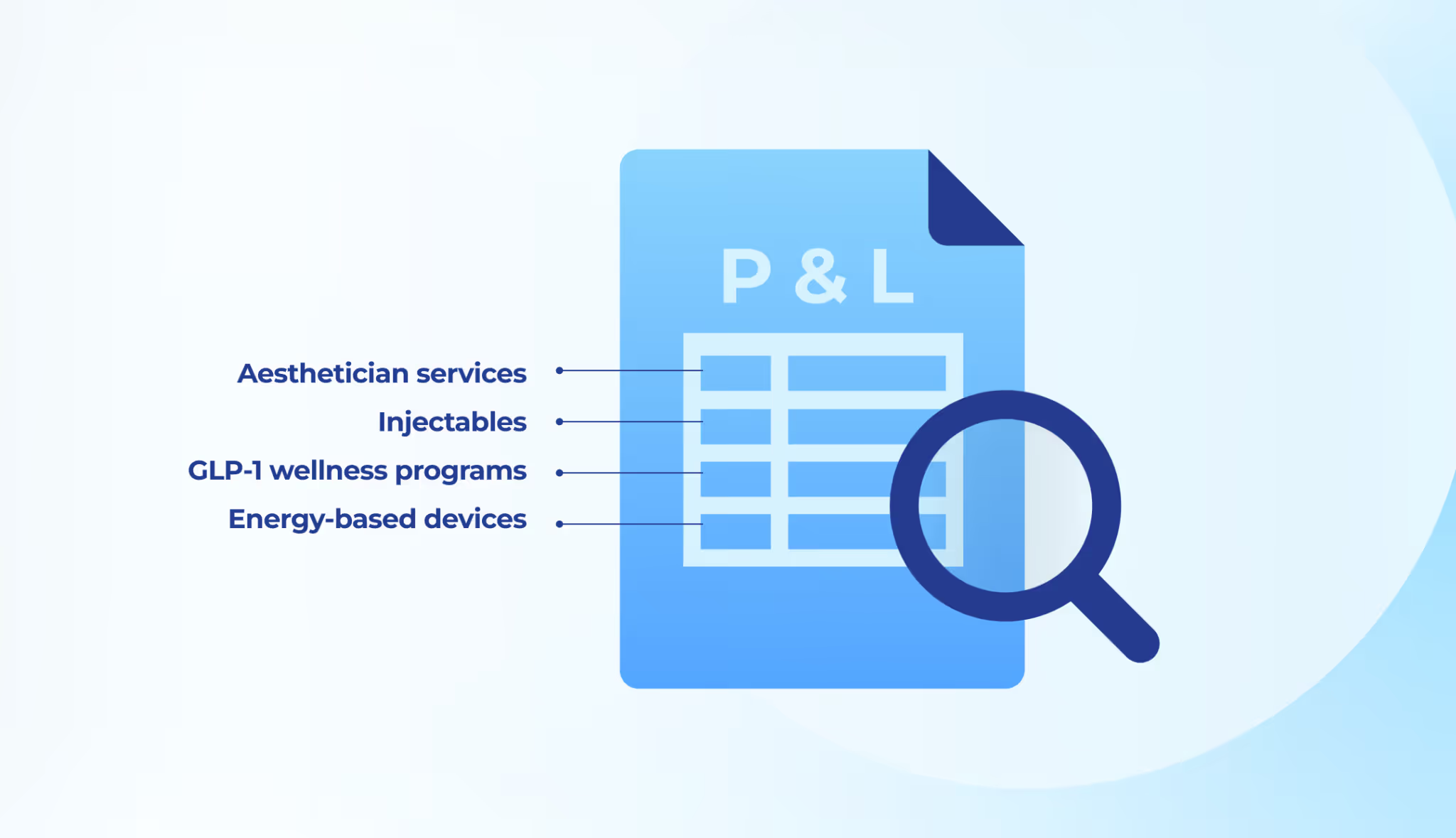
Every practice offers a range of treatments, and not all services contribute equally to profitability.
Some treatments drive high patient demand but carry thinner margins, while others may be performed less frequently but generate stronger returns.
For example, injectable treatments often drive consistent patient demand, while certain device-based treatments may generate higher margins but require more intentional scheduling to maintain utilization.
Regularly reviewing service mix helps practices understand how different treatments contribute to the overall financial health of the business. Over time, this visibility can inform scheduling priorities, marketing focus, and pricing decisions.
Practices that understand the financial role of each service are better positioned to build a treatment portfolio that supports both patient outcomes and sustainable growth.
A Profitability Check for Your Practice
Once you’ve reviewed the factors that impact margins and profitability, you can use this information to estimate a few key financial metrics.
Using basic operating data that you likely already have on hand in your accounting systems, you can calculate:
Break-even analysis helps practices understand how many treatments must be performed each month before the practice begins generating profit.
Start with:
From there, you can begin estimating how individual services contribute to overall profitability and where adjustments may have the greatest impact.
If this feels overwhelming, just start with these three quick questions:
And if you still need support, book a free, 30-min strategy session to learn about our Growth Readiness Assessment and explore your numbers further and better understand how your treatments contribute to overall profitability.
Taking a Closer Look at Your Numbers
When practices understand how individual services contribute to overall performance, decision-making becomes clearer.
Pricing adjustments become easier to evaluate. Scheduling priorities become more intentional. Marketing investments become easier to measure.
At Synergy, we work with aesthetics practices across the Midwest to review operational performance, identify opportunities to improve margins, and help owners build the systems that support long-term growth.
If you’d like support in taking a closer look at your numbers, our team would be happy to start the conversation.
Book a Synergy Ventures Consultation
Frequently Asked Questions
How often should practices review their margins?
It’s helpful to review key metrics quarterly. This allows owners to track trends while avoiding the noise that can come from short-term fluctuations.
Do margins vary significantly between services?
Yes. Treatments can differ widely in product cost, provider time, and patient demand. Reviewing margins by service helps practices understand how each offering contributes to overall profitability.
Does improving margins mean raising prices?
Not necessarily. Margin improvements often come from a combination of factors such as better utilization, a balanced service mix, stronger patient retention, and thoughtful pricing adjustments.
Practices may also improve margins by structuring treatment packages, reducing unused inventory, or encouraging follow-up maintenance treatments that increase lifetime patient value.
What is a healthy profit margin for an aesthetics practice?
Many healthy aesthetics practices aim for net profit margins between 15% and 25%, but healthy margins can vary depending on a practice’s service mix and overhead structure. Practices with strong patient retention and balanced service offerings often perform at the higher end of that range.
Featured Posts


Not sure where to start?
Tell us a little about your practice and we'll connect you with the right resource, whether that's a product conversation, a business planning session, or something in between.
